Do You Need a Boating License? The Complete Guide for the Netherlands
Wondering whether you need a boating license in the Netherlands? Learn about boat length, speed limits, Klein Vaarbewijs 1 & 2, and avoid heavy fines.
Years ago, when I bought my first pre-owned Dutch sloep with a more powerful outboard motor, I thought I could head straight out onto the water. Fortunately, a neighbour at the marina warned me about the statutory speed limit just in time; otherwise, my maiden voyage would have come with a hefty fine. Whether you need a boating license in the Netherlands does not depend on how fast you are actually cruising, but on your vessel's theoretical top speed and overall hull length.
As an experienced boater, I see the same confusion arise every spring at the slipway or in the locks. People enthusiastically buy an inflatable dinghy with a powerful outboard or a spacious motor cruiser without knowing the exact regulations set by Rijkswaterstaat and the CBR. On the Obato platform, data from thousands of searches reveals that buyers often only check whether their dream boat is license-free after completing the purchase. In this guide, I will explain exactly where the legal thresholds lie so you can cast off with complete peace of mind and full insurance coverage.
When is a boating license required on Dutch waters?
Dutch legislation for pleasure craft is very straightforward and enforces two strict criteria: the length of the vessel and the maximum speed it can achieve. According to the CBR and Rijkswaterstaat, you immediately need a boating license (Klein Vaarbewijs) as soon as your vessel meets either of these two criteria. It makes no difference whether you are cruising along a tranquil canal in Friesland or navigating a busy river.
Here are the two primary criteria for pleasure craft according to official authorities:
- Boat length: Your vessel has an overall length between 15 metres and 25 metres (vessels of 25 metres and longer are subject to stricter requirements, such as the Large Pleasure Craft Certificate / Groot Pleziervaartbewijs).
- Boat speed: Your motorboat, personal watercraft, or jet ski can travel faster than 20 kilometres per hour through the water, regardless of how small or short the boat is.
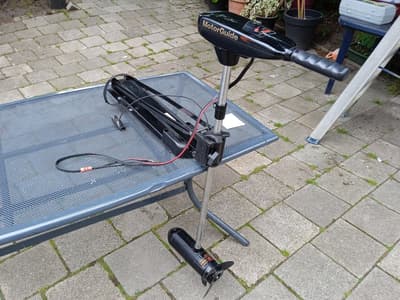
In practice, this means that a classic ten-metre steel launch with a modest diesel engine is completely license-free, provided its top speed remains below 20 km/h. However, if you fit a sizeable outboard motor to a small three-metre inflatable dinghy that allows it to plane and exceed 20 km/h, a license is immediately mandatory. If you are unsure which vessels require a license while searching for your next vessel, view our boat listings to see how different hull shapes and engine setups are classified.
Fast motorboat regulations and the crucial speed limit
One of the biggest pitfalls on the water revolves around the fast motorboat regulations (snelle motorboot regels). Many novice skippers assume that they do not need a boating license if they simply cruise at a leisurely pace and avoid opening up the throttle. However, the water police and the RDW (Netherlands Vehicle Authority) look at the potential top speed of the boat and engine combination, not the speed displayed on your GPS at that specific moment.
During a waterborne inspection, law enforcement evaluates engine output relative to the weight and hull design of the craft. If the vessel is capable of exceeding 20 km/h at full throttle, it is legally classified as a fast motorboat. Throttle limiters are generally only accepted by inspectors if they have been installed professionally and irreversibly with official certification, which is often difficult to prove on the water.
Mandatory RDW registration and safety equipment
In addition to the skipper holding a mandatory boating license, a fast motorboat must also be officially registered with the RDW. You will receive a registration mark (the well-known Y-number plates or newer alphanumeric combinations) that must be clearly displayed on both sides of the hull. Furthermore, Rijkswaterstaat and the KNRM (Royal Netherlands Sea Rescue Institution) require that operators of fast motorboats always wear a kill cord (safety lanyard), carry an approved fire extinguisher, and have a properly fitting lifejacket readily accessible for every person on board.
The difference between Klein Vaarbewijs 1 and 2 explained
Once you determine that your vessel requires a license, the CBR offers two standard certificates: Klein Vaarbewijs 1 and 2 (commonly abbreviated as KVB1 and KVB2). The distinction between these two credentials is not based on the type of boat you may skipper, but on the navigation area in which you cruise. After all, the inland navigation rules on a calm canal differ significantly from the navigational demands of open, tidal waters.
- Klein Vaarbewijs 1 (KVB1): Authorises you to navigate all inland rivers, canals, and lakes in the Netherlands (such as the Frisian lakes, the Meuse, the Rhine, and the border lakes / Randmeren). The open waters of the Gouwzee and the Markermeer, however, are excluded from this category.
- Klein Vaarbewijs 2 (KVB2): Serves as an extension to KVB1 and grants access to expansive open inland waterways. This includes the IJsselmeer, Markermeer, IJmeer, Wadden Sea, Eastern Scheldt, Western Scheldt, and the Ems-Dollard estuary.
From my own sailing experience on the IJsselmeer and the Wadden Sea, I can assure you that the additional theory required for KVB2 is well worth the effort. For part 2, you learn how to work with nautical charts, compass variation and deviation, tide tables, and open-water buoyage systems. Once you hold both KVB1 and KVB2, your certificate automatically includes the International Certificate of Competence (ICC) for both inland and coastal waters, which is indispensable if you plan to charter a boat in countries such as Croatia, Spain, or Greece.
Fines for boating without a license and insurance liabilities
Every summer, the maritime police, Rijkswaterstaat, and local water wardens conduct numerous inspections on popular lakes and waterways. The fine for boating without a license is substantial and easily runs into hundreds of euros, depending on the exact infraction and whether you have also failed to register your vessel with the RDW. Furthermore, once a citation is issued, you are not permitted to continue skippering; an individual holding the appropriate certificate and meeting the minimum age requirement of 18 must take the helm.
The greatest financial risk, however, is not the initial fine from public prosecutors, but the fine print in your boat insurance policy. Leading marine insurers and organisations like the ANWB stipulate that your insurance cover is generally voided the moment you operate a craft without the legally required license. If you cause a collision with another vessel or a swimmer while piloting a fast RIB or a 16-metre motor yacht, you will be held personally liable for all hull damages and medical claims.
For this reason, never allow minors to navigate unattended in a tender fitted with an oversized outboard motor. As the boat owner, you can also be held legally responsible for lending a vessel that requires a license to someone who does not possess the correct qualifications. If you would like to learn more about safety and liability on the water, read our advice guides for comprehensive checklists tailored to every type of boat.
How do you obtain your boating license from the CBR?
All examinations for recreational boating in the Netherlands are administered by the CBR—the same national authority responsible for motor vehicle driving tests. A common misconception among beginner boaters is that obtaining a Klein Vaarbewijs requires a practical examination on the water. In the Netherlands, examinations for both Klein Vaarbewijs 1 and 2 consist exclusively of a computer-based theoretical test taken at an official CBR testing centre.
During the KVB1 theory test, you are tested on the Inland Waterways Police Regulations (BPR), right-of-way rules between sailing yachts, motorboats, and commercial shipping, waterway signage, navigation lights, sound signals, and fundamental manoeuvres such as transiting a lock. On busy routes such as the Princess Margriet Canal or the Amsterdam canals, you will immediately realise why understanding blind spots around commercial barges and the effects of propeller walk is vital.
Bridging theory and practice at a boat training school
Although a practical test is not legally required, I strongly recommend booking practical lessons with a recognised sailing or motorboat school accredited by the Watersportverbond or HISWA. Moorings in tight berths during heavy crosswinds demand muscle memory and boat handling techniques that cannot be learned from a textbook alone. If you are looking for a suitable place to practice or moor your boat after obtaining your certificate, find a marina in your area through our directory.
Do you operate a boat training school, yacht brokerage, or marine business? Obato currently offers a 50% introductory discount on the Service Provider Profile. While the regular price is €120 per year (excl. VAT), you can join for just €60 for your first year. This includes an AI-enriched business profile, prominent placement in our search directories, and direct leads from active boaters via our service provider registration page.
Exceptions and special regulations for larger vessels
Not every vessel on Dutch waterways fits neatly into the standard rules applicable to day boats or centre-console craft. There are specific exemptions to be aware of, particularly regarding historic barges, sailing yachts, and commercial operations. For instance, you do not need a boating license for a pure sailing vessel under 15 metres, even if a favourable wind and a lightweight catamaran propel you across the water at speeds well above 20 km/h.
However, as soon as that same sailing yacht is equipped with an auxiliary motor capable of pushing it beyond 20 km/h under power, or when its hull length exceeds 15 metres, licensing requirements apply immediately. Additionally, lower thresholds apply to commercial operations: even on a vessel under 15 metres, you may need an inland master's certificate as soon as you carry paying passengers or deploy the boat commercially as a tug.
Do you own an impressive motor yacht or a fast sports boat that you are looking to sell in order to switch to a license-free day boat? Our marketplace reaches qualified boat buyers who know exactly what they are looking for; place an advert and list your vessel today.
Frequently Asked Questions
What is the minimum age to operate a boat that requires a license?
To operate a vessel requiring a license (longer than 15 metres or faster than 20 km/h), the skipper must be at least 18 years of age. While the CBR permits candidates to take the Klein Vaarbewijs theory examination before turning 18, the official certificate will only be issued and become legally valid on your 18th birthday.
How long is a Dutch Klein Vaarbewijs valid?
A Dutch Klein Vaarbewijs (both Part 1 and Part 2) issued after mid-2014 has lifetime validity until you reach the age of 70. From your 70th birthday onward, the license must be renewed every five years through the CBR, which requires submitting a health self-declaration (and potentially undergoing a medical examination).
Do I need a license for an electric boat or whisper boat?
Electric boats are subject to the exact same statutory regulations from Rijkswaterstaat as fuel-powered vessels. As long as the electric day boat or whisper boat is under 15 metres in length and cannot exceed 20 km/h, no license is required; for modern, high-speed electric sports boats capable of higher speeds, a license is mandatory.
Is a Dutch boating license valid abroad?
Yes, the current credit-card-sized Dutch Klein Vaarbewijs doubles as an International Certificate of Competence (ICC). Holding KVB1 provides an ICC for foreign inland waters, while holding both KVB1 and KVB2 adds the Coastal Waters endorsement, which is recognised across most European countries when chartering a boat at sea.
Can an unlicensed person take the helm if a licensed skipper is on board?
On a fast motorboat (capable of over 20 km/h), the Inland Waterways Police Regulations state that the person actively steering must be at least 18 years old and hold a valid boating license personally. On large vessels (15 to 25 metres) that do not exceed 20 km/h, an unlicensed person may steer under the direct supervision of a qualified skipper on board, provided the skipper is able to intervene immediately.
Conclusion: prepare well and enjoy carefree cruising
Remembering whether you need a boating license in the Netherlands comes down to two key numbers: 15 metres in length and 20 kilometres per hour in speed. If your day boat, sailing yacht, or cruiser remains below both thresholds, you can explore Dutch canals, rivers, and lakes without having to sit an exam. If your craft exceeds either limit, make sure you obtain your Klein Vaarbewijs 1 (and Part 2 for larger open waters) via the CBR to steer clear of heavy fines and voided insurance policies.
Ready to find your ideal license-free boat or a high-performance cruiser? Explore our boat listings on Obato and filter easily by length, horsepower, and boat category. If you are a marine industry professional, don't forget to take advantage of our introductory 50% discount on the Service Provider Profile via our sign-up page!
Gerelateerde artikelen
Location Bateau Côte d'Azur: Uw Gids voor Bootverhuur
Ontdek de Côte d'Azur vanaf het water! Onze complete gids voor bootverhuur ('location bateau') in Nice, Cannes en meer. Vind uw droomboot vandaag.
Boot Mieten Bodensee: Ultieme Gids
Plan uw vaarvakantie op de Bodensee! Deze gids helpt u met vergunningen, bootkeuzes en de mooiste plekken. Vind de beste bootsverhuur.
Boot mieten Ostsee: De ultieme gids voor je vaarvakantie
Plan je perfecte vaarvakantie op de Oostzee. Deze gids helpt je met het kiezen van de boot, routes, vaarbewijzen en kosten. Start je avontuur hier!